Sun-Basking Giants: A Guide to Crocodile Safari at Jawai Dam
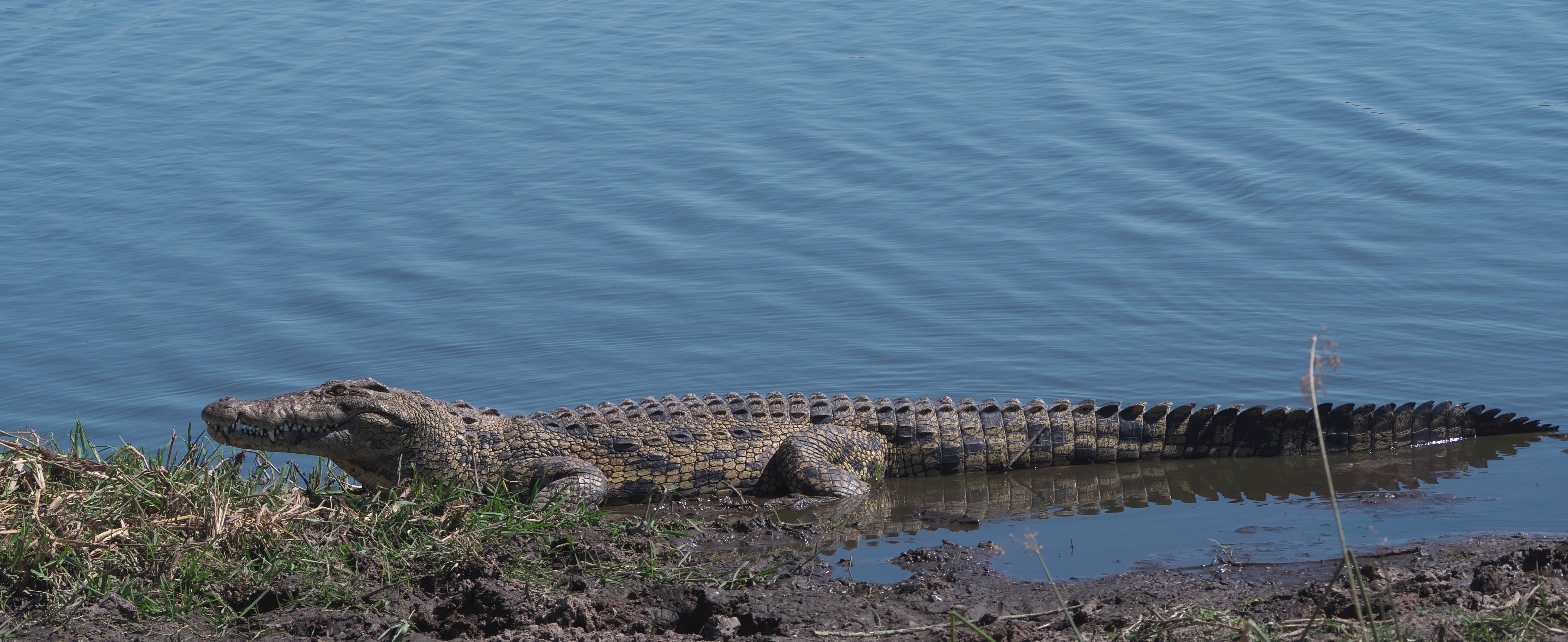
the corcodile current time means summer time not visitng easily to tourist beacuse weather warming very high then animal always health concious they can't moving out that heat warming time
While the leopards of Jawai get all the fame, the waters of the Jawai Dam hide another ancient predator that most visitors overlook entirely — the Marsh Crocodile (also known as the Mugger). Watching these massive reptiles bask on the granite rocks along the reservoir banks is a thrilling experience every wildlife lover must have. Silent, still, and deceptively patient, the mugger crocodile is one of nature's oldest survivors — and Jawai Bandh is one of the finest places in all of India to watch them in their natural habitat.
Most visitors come to Jawai expecting leopards and leave unexpectedly amazed by the crocodiles. This guide tells you everything you need to know — when to go, where to look, what to expect, and why this ancient reptile deserves far more of your attention than it usually receives.
Meet the Mugger — Jawai's Ancient Resident
The Mugger Crocodile (Crocodylus palustris) is one of three crocodilian species found in India and the most widespread. The name "Mugger" comes from the Hindi word magar, meaning water monster — a name the locals of Jawai have used for centuries. Also called the Marsh Crocodile or Broad-Snouted Crocodile, the mugger is perfectly adapted to the seasonal wetlands and reservoirs of Rajasthan.
Adult muggers at Jawai regularly reach 3 to 4 metres in length and can weigh well over 200 kilograms. Their broad, rounded snout distinguishes them from the narrow-snouted Gharial. They are ambush predators of extraordinary patience — capable of remaining motionless on a rock for hours, conserving energy while their cold blood absorbs the warmth of the Rajasthan sun.
What makes Jawai remarkable is not just the presence of crocodiles — it is the sheer number of them. The reservoir and its granite-edged banks support one of the healthiest mugger populations in Rajasthan, with hundreds of individuals living in and around the dam waters. On a good winter morning, you can count dozens of crocodiles basking simultaneously along a single stretch of shoreline.
The Best Time to Spot Them
Best Season — October to March
The peak season for crocodile watching at Jawai Bandh runs from October through March — the cooler months of the Rajasthan year. This is when crocodile behaviour is most predictable and most visible. Being cold-blooded reptiles, muggers depend entirely on external heat sources to regulate their body temperature. In winter, when overnight temperatures in the Jawai region can drop to 8°C to 12°C, crocodiles are highly motivated to bask — emerging from the water as soon as sunlight hits the granite rocks and remaining exposed for long stretches of the morning and afternoon.
This behavioural dependency on sunlight is the crocodile watcher's greatest advantage. You do not need to search for them — you simply need to arrive at the right time and look at the right places.
Best Time of Day — Morning Basking Window
The single most important thing to know about crocodile watching at Jawai is that morning is everything. After a cold night in the water, muggers emerge onto the granite banks as soon as the sun rises and begin basking immediately. The morning basking window is the longest and most concentrated crocodile activity period of the entire day.
| Time | Crocodile Activity | Viewing Quality |
|---|---|---|
| 6:00 AM – 7:00 AM | First individuals emerge from water onto sunlit rocks | Good — early light, active movement |
| 7:00 AM – 10:00 AM | Peak basking — maximum numbers on rocks, mouths open (gaping to regulate heat) | Excellent — best of the day |
| 10:00 AM – 12:00 PM | Numbers begin reducing as body temperature reaches optimum | Good |
| 12:00 PM – 3:00 PM | Most crocodiles return to water or move to shade — midday heat too intense | Limited |
| 3:00 PM – 5:30 PM | Afternoon basking resumes as temperatures drop — second viewing window | Good — especially October to December |
| After 5:30 PM | Crocodiles return to water as temperature falls | Poor |
Plan your safari departure for no later than 6:30 AM to reach the reservoir banks during the peak morning basking window. Guides who know the reservoir well can position you at prime basking locations before the crocodiles even emerge — giving you the extraordinary experience of watching them haul themselves out of the water onto the rocks as the first sunlight reaches them.
Afternoon Basking — The Second Window
Between 3:00 PM and 5:30 PM a second, shorter basking window occurs as afternoon temperatures begin to drop. This is particularly good in the cooler months of November and December when afternoon temperatures fall quickly. The afternoon light is also warmer and more golden — ideal for photography. While the morning session typically offers more crocodiles in more active poses, the afternoon window should not be underestimated, especially for photographers seeking that perfect low-angle golden-hour image of a crocodile on a granite rock.
Month-by-Month Guide
Not all months at Jawai offer equal crocodile watching. Here is what to expect season by season:
- October — November: Excellent. Water levels are high following the monsoon, crocodiles are well-fed and active. Morning basking begins from early October as temperatures start to fall. Good combination of crocodile watching and bird watching as migratory species begin arriving.
- December — January: Peak crocodile watching season. Cold overnight temperatures mean crocodiles are highly motivated to bask and emerge very early. Numbers on the rocks are at their maximum. Morning gaping behaviour — where crocodiles hold their mouths open wide to absorb heat — is most commonly seen in these months. Combine with flamingo and crane watching for the complete Jawai wildlife experience.
- February — March: Very good. Days are warming but overnight temperatures are still cool enough to drive morning basking behaviour. February is also the start of nesting season for muggers — females begin selecting and preparing nesting sites near the reservoir margins, adding an additional layer of interesting behaviour to observe.
- April — June: Poor for crocodile watching. Summer heat means crocodiles remain active in the cool water rather than basking on hot rocks. This is also the off-season for most Jawai tourism activity.
- July — September: Monsoon season. Jawai Dam fills, crocodiles disperse widely across the expanded water body. Activity is difficult to predict and the area receives significant rainfall making safari conditions challenging. Most Jawai camps are closed during this period.
Where to Find Them — The Best Basking Locations
Mugger crocodiles at Jawai have strong site fidelity — individual animals return to the same basking rocks day after day, season after season. Experienced local guides know exactly which granite outcrops and rocky islands in the reservoir are favoured basking sites, and can position your vehicle for close, unobstructed views.
The best basking locations share common characteristics that any observant visitor can learn to identify:
- South-facing granite slopes: Rocks that face south or southeast receive the first and most intense morning sunlight — these are invariably the most popular basking sites. Look for smooth, gently angled granite surfaces that extend from the waterline upward — perfect for a crocodile to haul itself out and arrange itself at whatever angle maximises sun exposure.
- Rocky islands and promontories: Small granite islands and rocky points that project into the reservoir offer crocodiles 360-degree sun exposure and safety from disturbance on all sides. These are often occupied by the largest, most dominant individuals.
- Low Tide Margins: When the water level in the dam is lower during the dry season, more rocky islands are exposed — creating additional basking surfaces and concentrating crocodile activity in a smaller area. This often produces the best viewing of the season as animals gather on fewer available sites.
- Shallow muddy bays: The largest females — particularly during nesting season from February to May — prefer the quieter, vegetated margins of shallow bays where they can nest without disturbance. Your guide will know to approach these areas with particular care during nesting season.
Understanding Crocodile Behaviour — What You Will See
Watching mugger crocodiles is a masterclass in patience — but once you understand what their behaviour means, even an apparently motionless crocodile on a rock becomes endlessly fascinating.
Basking and Gaping
The most commonly observed behaviour is simply basking — a crocodile lying completely still on a rock with its body oriented to maximise sun exposure. Look closely at the body position: crocodiles will shift their orientation throughout the morning as the sun moves, always angling for maximum heat absorption.
Gaping — holding the mouth wide open — is one of the most dramatic and misunderstood crocodile behaviours. It is not aggression or hunger. It is thermoregulation. The highly vascularised tissue inside a crocodile's open mouth releases excess heat very efficiently, allowing the animal to maintain its optimal body temperature even as the Rajasthan sun grows stronger through the morning. A crocodile gaping at you is simply doing the reptilian equivalent of sweating.
Entering and Exiting the Water
The moments of entry and exit are the most dynamic of the day. Watch for the heavy, deliberate movement as a crocodile hauls itself from the water onto a rock — the powerful tail sweeping, the legs pushing, the whole massive body repositioning onto the warm granite surface. These moments happen most frequently in the first two hours after sunrise and are among the most dramatic wildlife photography opportunities at Jawai.
Social Interactions
Muggers at Jawai are not strictly solitary. On prime basking rocks you will often see multiple individuals basking together — sometimes touching, sometimes arranged in a loose hierarchy with larger animals occupying the best positions. Watch for subtle dominance interactions: a larger animal slowly advancing toward a smaller one until the smaller animal slides back into the water to reposition elsewhere. No aggression, no drama — just an ancient social negotiation conducted in almost complete stillness.
Hunting Behaviour
Actual hunting is rarely observed during morning safaris but the evidence of it is everywhere. The muggers of Jawai feed primarily on fish, frogs, and small mammals — and the large fish population of the reservoir provides a reliable year-round food source that supports the crocodile population's remarkable density. On evening safaris, watching for a crocodile's patient approach toward a drinking bird or small animal near the water margin is one of the more dramatic potential sightings — though it requires both patience and a degree of luck.
The Remarkable Coexistence — Crocodiles and the Rabari Community
Perhaps the most extraordinary aspect of the Jawai crocodile story is not the crocodiles themselves — it is the relationship between the mugger population and the Rabari pastoral communities of the villages surrounding Jawai Bandh.
The Rabari are a nomadic pastoral people who have lived alongside the wildlife of Jawai for centuries. Their relationship with the leopards of Jawai is already internationally famous — the Rabari consider leopards sacred and have never hunted them, creating the conditions for one of the world's most extraordinary human-predator coexistences. Their relationship with the mugger crocodiles is equally remarkable — and far less well known.
Rabari cattle regularly drink from the reservoir margins. Rabari children have grown up playing near the same rocks where large crocodiles bask. Rabari women wash clothes at the water's edge. And yet incidents involving crocodiles and the local community are extraordinarily rare. The Rabari's deep cultural respect for wildlife — rooted in centuries of shared landscape — appears to extend to the muggers of Jawai Bandh just as it does to the leopards on the granite hills above.
This coexistence is not passive indifference. Local people know which individuals are present, where the large animals bask, and when to keep their distance. It is a relationship built on generations of accumulated knowledge, mutual familiarity, and a cultural framework that sees wildlife as neighbour rather than threat — a model of human-wildlife coexistence that conservation scientists find deeply instructive.
Crocodile Safari Tips — How to Get the Best Experience
- Book a dedicated crocodile safari: Many Jawai visitors take only a leopard safari and see the crocodiles incidentally from a distance. Ask your camp specifically for a reservoir-focused safari that spends dedicated time at known crocodile basking locations. The difference in quality of sighting is enormous.
- Go early without exception: The morning basking window from 7:00 AM to 10:00 AM is non-negotiable. A 10:00 AM departure will result in a dramatically inferior crocodile experience compared to a 6:30 AM departure. This is the single most important factor in the quality of your sighting.
- Bring binoculars: While your guide will position the vehicle as close as responsible viewing permits, binoculars allow you to observe fine behavioural details — eye movement, gaping, subtle body repositioning — that transform a sighting from impressive to unforgettable.
- Use a telephoto lens: For photography, a lens of at least 300mm is recommended. The best crocodile images from Jawai are taken from vehicle level with a low angle — ask your guide to position where this is possible.
- Stay in the vehicle and stay quiet: Muggers are sensitive to disturbance. Voices, sudden movement, and engine noise all cause crocodiles to slide back into the water. The quieter and stiller your approach, the longer the crocodiles remain in position.
- Visit in December or January for peak numbers: If your sole purpose is maximising crocodile sightings, December and January offer the coldest nights and therefore the most intense and extended morning basking periods of the year.
- Combine with bird watching: The same reservoir margins that attract crocodiles attract extraordinary concentrations of waterbirds — painted storks, herons, egrets, kingfishers, and in winter, thousands of flamingos. A crocodile safari that also dedicates time to the reservoir birdlife gives you one of the most complete wildlife experiences available anywhere in Rajasthan.
Photography Guide — Capturing the Giants
Mugger crocodiles at Jawai are among the most photogenic wildlife subjects in India — and among the most underappreciated by photographers who have come primarily for the leopards. Here is how to make the most of the opportunity:
- Best light — 6:30 AM to 8:30 AM: The warm golden light of early morning on a grey-green crocodile against pale granite creates some of the most dramatic reptile photography possible. The combination of warm sky tones, cool rock surfaces, and the textured skin of a large crocodile in good light is extraordinary.
- Gaping shots — 8:00 AM to 10:00 AM: As temperatures rise, gaping behaviour peaks. A large mugger with its mouth fully open on a granite rock, reflecting a blue Rajasthan sky in its eye, is one of wildlife photography's great images.
- Water entry/exit — 6:00 AM to 7:30 AM: Catch the transition moments as crocodiles haul themselves from the water. Use a fast shutter speed — 1/800th of a second minimum — to freeze the movement of water droplets.
- Multiple animal compositions — winter mornings: On prime basking sites in December and January, groups of five to fifteen crocodiles on a single rock face create extraordinary landscape-scale wildlife compositions. Use a wider angle to capture the full scene.
- Reflection shots — calm mornings: On still mornings with low wind, the flat water surface of the reservoir perfectly mirrors the granite hillocks and basking crocodiles above — creating surreal double images that are among the most distinctive photographs any Jawai visitor can bring home.
Facts About Jawai's Mugger Crocodile Population
- Species: Mugger Crocodile — Crocodylus palustris
- IUCN Status: Vulnerable
- Size: Adults typically 2.5 to 4 metres. Large males can reach 4.5 metres
- Weight: Adult males 150 to 250 kilograms
- Lifespan: 40 to 60 years in the wild
- Diet: Fish, frogs, small mammals, birds, carrion
- Nesting season: February to May — females lay 10 to 48 eggs in a hole nest near the water margin
- Incubation period: Approximately 55 to 75 days
- Population at Jawai: Several hundred individuals across the reservoir and surrounding wetland areas
- Conservation significance: Jawai Bandh supports one of the healthiest and most stable mugger populations in Rajasthan
The Dam That Made It All Possible
It is worth remembering that the extraordinary crocodile population of Jawai Bandh is itself a consequence of the dam's construction in 1957. Before Jawai Dam was built, the Jawai river dried completely for six to eight months of every year — the seasonal water cycle that characterises most rivers in semi-arid Rajasthan. In those conditions, supporting a stable crocodile population of any significant size was impossible.
The creation of a permanent, year-round reservoir changed everything for the muggers. Permanent deep water for hunting and thermal regulation. Year-round fish populations. Stable granite banks for basking. The mugger population at Jawai today is not simply surviving — it is thriving, and it owes that prosperity in large part to the vision of the Maharaja of Jodhpur who built the dam seven decades ago for entirely different reasons.
It is one of the most remarkable unintended conservation consequences in Indian history — an agricultural infrastructure project that accidentally created one of the finest crocodile habitats in the country.
Final Thoughts — Do Not Miss the Giants
Every visitor to Jawai arrives hoping to see a leopard — and most are fortunate enough to do so. But the visitors who come away with the deepest sense of having truly understood Jawai are those who stayed long enough and woke early enough to also sit quietly beside the reservoir at 7:30 on a cold January morning and watch a four-metre mugger crocodile drag itself onto a granite rock, arrange its ancient body in the first warm light of the day, and open its prehistoric jaws to the Rajasthan sky.
It is a scene that has been happening at Jawai since long before the dam was built — since long before any human being thought to call this landscape remarkable. The mugger crocodile does not perform for visitors. It simply endures, as it has endured for two hundred million years — and it is all the more extraordinary for that.
Book your morning safari. Go early. Stay quiet. And do not look only at the hills.
You Might Also Like