
The Ghost of the Hills: Leopard Tracking Secrets from our Expert Guides
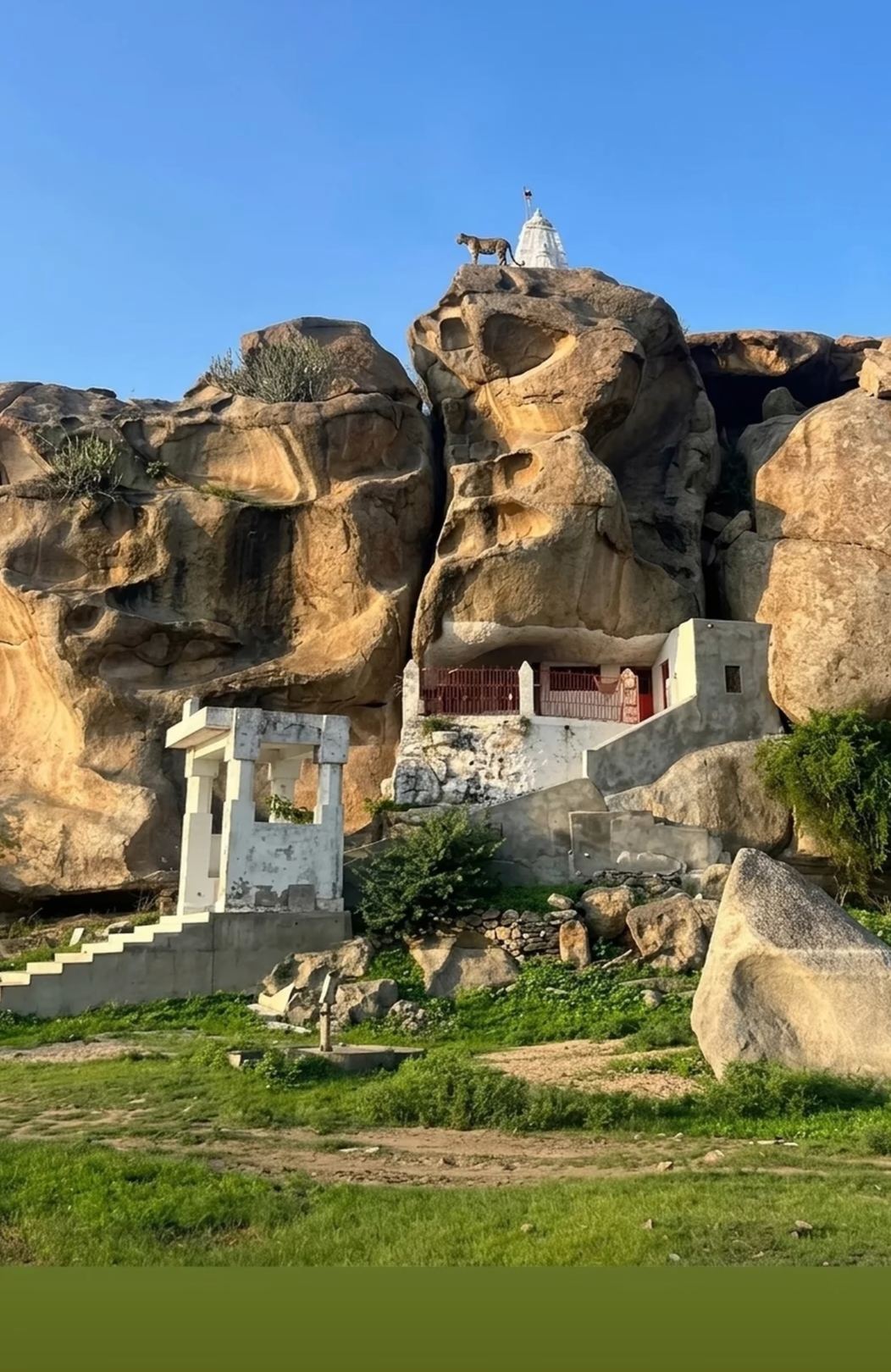
The Animal That Disappears in Plain Sight
There is a reason wildlife trackers and photographers around the world call the leopard the ghost of the hills. No other large predator on earth is as skilled at becoming invisible. A fully grown leopard — an animal weighing 60 to 70 kilograms with a coat of bold black spots — can vanish into a rocky hillside so completely that experienced trackers standing just 20 metres away will miss it entirely. At Jawai, where leopards have perfected this art across centuries of granite terrain, finding them is both a science and something approaching a spiritual practice.
Our guides at Jawai have spent their entire lives on these hills. Many were born in Rabari families that have tracked leopards across these same rocks for generations. What they know about leopard behaviour, movement patterns, territorial habits, and reading the landscape cannot be found in any textbook. This is their knowledge — shared here for the first time in detail — so that when you arrive at Jawai, you see not just the obvious leopards, but the hidden ones too.
Secret 1 — Read the Landscape Before You Read the Animal
The first and most fundamental tracking secret our guides teach is this — before you look for a leopard, understand the landscape it lives in. A tracker who understands terrain will always find more animals than one who simply scans randomly.
At Jawai the granite hillocks are not random piles of rock. Each formation has a logic — shaded overhangs that provide afternoon shelter, flat elevated surfaces that serve as lookout points, narrow rock crevices deep enough for a mother to den with cubs, water runoff channels that create small pools after rain. A skilled guide reads these features instantly and knows before looking exactly where a leopard is most likely to be at each hour of the day.
Before every safari our guides mentally map the landscape by time and temperature. At 6 AM a leopard returning from a night hunt will seek an elevated open rock to warm itself in early sun. By 9 AM as heat builds it moves to a shaded overhang. By midday it retreats deep into a rock crevice invisible from below. By 4 PM as temperatures drop it re-emerges to a high lookout point surveying its territory before the evening hunt begins. This daily movement pattern is the master key to leopard tracking at Jawai — and our guides have mapped it for every individual leopard across every hillock in the region.
Secret 2 — The Rabari Information Network
No technology — no camera trap, no GPS collar, no drone — can match the leopard tracking intelligence gathered daily by the Rabari herding community of Jawai. This is perhaps the most powerful and least understood secret behind the extraordinary sighting rates our guides consistently deliver.
Every morning before dawn, Rabari herders leave their villages and spread across the entire Jawai landscape with their cattle. By 7 AM there are Rabari men on virtually every hillock, in every valley, and along every track across the region. Every one of them has been reading this landscape since childhood. Every one of them notices instantly when a leopard has passed — a disturbed patch of dust, cattle that suddenly bunch nervously, a pair of crows mobbing a rock crevice, the absence of usual bird calls from a specific tree line.
Throughout the morning these herders communicate — by mobile phone today, by shouted calls across valleys in earlier generations — sharing leopard location information in real time across the entire landscape. Our guides receive this information continuously during safaris. When a Rabari herder 3 kilometres away reports that his cattle just spooked near the northern face of a specific hillock, our guide knows within minutes and can redirect the safari vehicle immediately.
This living human tracking network — built on centuries of intimate landscape knowledge and maintained by a community that considers leopards sacred — is worth more than any wildlife management technology money can buy. It is one of the primary reasons Jawai sighting rates are so dramatically higher than any comparable leopard destination in India.
Secret 3 — Reading Pug Marks Like a Story
Every leopard that moves across the Jawai landscape leaves a readable record in dust, soft soil, and sand. Our guides can extract an extraordinary amount of information from a single set of pug marks — information that directly guides where the safari goes next.
Here is what an experienced Jawai guide reads from leopard tracks:
Age of the Track
Fresh pug marks have sharp crisp edges with clearly defined toe pad details. As time passes edges crumble slightly, wind deposits fine dust in the depression, and small insects cross the track leaving their own tiny marks. Our guides can estimate track age to within 30 to 60 minutes accuracy in good conditions — telling the difference between a leopard that passed an hour ago and one that passed last night.
Individual Identity
Every leopard has a unique pug mark — slightly different size, shape, and the specific pattern of the central pad. Our most experienced guides have memorised the tracks of over 20 individual Jawai leopards and can identify a specific animal from its prints alone. Knowing which individual made a track tells them immediately where that leopard is likely heading — because each territorial leopard follows predictable routes across its home range.
Speed and Intent
Walking tracks show evenly spaced prints with full pad contact. A stalking leopard leaves tracks where the animal has placed each foot with unusual deliberateness — slightly deeper heel impressions as weight shifts carefully forward. A running leopard leaves grouped prints in sets of four with large gaps between groups. Finding stalking tracks near dawn tells our guides a hunt may have happened nearby — and finding the hunt site often means finding a leopard resting with a full stomach in a predictable nearby location.
Family Information
When cub tracks appear alongside adult female tracks our guides know immediately that a mother is moving with cubs — and that the den site is almost certainly within 500 metres of where the family tracks begin. Cub sightings are among the rarest and most precious wildlife moments at Jawai — and they almost always begin with our guides reading family track patterns before the safari even reaches the location.
Secret 4 — The Alarm Call Network
The Jawai landscape has its own natural leopard detection system that has nothing to do with human observation — and our guides are tuned into it with an sensitivity that takes years to develop. Every species in the Jawai ecosystem reacts to leopard presence in a specific and readable way creating what trackers call the alarm call network.
These are the key alarm signals our guides listen and watch for continuously during every safari:
- Langur monkeys: The most reliable leopard alarm in the Jawai ecosystem. A langur that spots a leopard produces a specific loud whooping bark repeated rapidly — completely different from its other calls. When our guides hear langur alarm calls they turn the vehicle immediately toward the sound
- Peacocks: A peacock that spots a large predator produces a harsh screaming call and takes flight vertically — their brilliant plumage making them visible from hundreds of metres away as they rise above the scrub
- Crows and ravens: These highly intelligent birds actively mob leopards — diving repeatedly at a resting cat and calling loudly. A group of crows circling and diving at a specific rock is one of the most reliable leopard location indicators in the Jawai landscape
- Cattle behaviour: Rabari cattle that suddenly stop grazing, raise their heads simultaneously, and begin moving nervously together into a tight group are detecting a predator nearby — often before any human or bird has noticed
- Sudden silence: Experienced guides pay as much attention to what they do not hear as what they do. When an area of normally active birdlife goes suddenly quiet it often means a predator has just moved through — the absence of sound itself becomes a tracking signal
Secret 5 — Knowing Each Leopard as an Individual
This is perhaps the most remarkable tracking secret of all — and the one that most clearly demonstrates why our local guides are irreplaceable at Jawai. Our most experienced guides do not simply find leopards. They find specific leopards by name, know their individual personalities, predict their behaviour, and can often locate a particular animal on demand.
Over years of daily observation our guides have built detailed personal knowledge of Jawai's individual leopards — knowledge that goes far beyond any scientific study. They know which female is most likely to be seen with cubs in February. They know which territorial male patrols the northern hillocks at dawn and the southern valley at dusk. They know which young male is currently challenging territorial boundaries and can be found in specific transitional zones. They know which individual is most relaxed around vehicles and which one retreats at the sound of an engine.
This individual knowledge means that a skilled Jawai guide does not simply drive the landscape hoping to find a leopard. They make calculated decisions — based on season, time of day, recent territorial activity, and individual personality — about exactly which hillocks to visit, in which order, at which time. This is the difference between a lucky sighting and a consistently extraordinary safari experience.
Secret 6 — Patience is the Master Skill
Every tracking technique, every landscape reading skill, every alarm call interpretation, every individual leopard personality profile — all of it becomes useless without the one quality that separates good wildlife guides from truly great ones. Patience.
Our guides have a saying that the best safaris are won by the quietest jeep with the most patient passengers. A leopard that is half-hidden behind a boulder will emerge completely if the vehicle simply waits in silence for ten minutes. A leopard that has retreated behind rocks after a noisy approach will re-emerge on the same rock within 20 minutes if the engine is turned off and the vehicle sits completely still and quiet.
The guests who experience the most extraordinary Jawai leopard moments are always those who understand this. They sit quietly, move slowly, trust their guide completely, and resist the urge to ask to move on. They understand that at Jawai the leopard is never truly gone — it is simply waiting to see if you are worthy of its attention.
What Our Guides Want Every Visitor to Know
After decades of guiding thousands of visitors across the granite hills of Jawai, our expert guides have one message they want every person who visits this extraordinary place to carry with them:
The leopard does not owe you a sighting. It owes you nothing. Every moment it chooses to remain visible in your presence is a gift — from the animal, from the Rabari community that has protected it for centuries, and from the sacred hills of Jawai that have kept this extraordinary bond alive against all odds.
Come to Jawai with humility, patience, and genuine respect for the wild world you are entering. Follow your guide without question. Stay silent when silence is needed. And the ghost of the hills — this magnificent, ancient, sacred animal — will almost certainly choose to reveal itself to you in ways that will change how you see the natural world forever.
You Might Also Like