Taste of Rajasthan: Must-Try Traditional Food in Jawai
Where Safari Meets Rajasthani Gastronomy
Most travel guides about Jawai focus entirely on leopards, landscapes, and safari logistics. Very few mention what many returning visitors quietly rate as one of their most memorable parts of the entire experience — the food. Jawai sits at the heart of a Rajasthani culinary tradition that is bold, ancient, deeply flavourful, and unlike anything most visitors have tasted before. The semi-arid landscape that shaped the leopards of Jawai also shaped a cuisine built for survival in harsh conditions — dishes with long shelf lives, intense spicing, generous use of ghee, and flavours that have been perfected across hundreds of years of desert cooking.
From luxurious camp dinners under the stars to simple village meals shared with Rabari families, eating at Jawai is an experience that deserves as much attention as the wildlife itself. This is your complete guide to the must-try traditional food of Jawai and Rajasthan.
Dal Baati Churma — The Soul of Rajasthani Cooking
Dal Baati Churma is without question the most iconic dish of Rajasthan and the one meal every Jawai visitor must experience before leaving. This is not simply a dish — it is a complete culinary philosophy that reflects everything about Rajasthani culture, history, and relationship with the land.
What is Dal Baati Churma?
The dish has three distinct components served together:
- Baati — hard baked wheat dough balls traditionally cooked in hot desert sand or over a wood fire until they develop a hard golden crust outside and a soft floury interior. At safari camps baati is traditionally fired in a clay oven called a chulha. Broken open and drenched in enormous quantities of pure desi ghee they are extraordinarily satisfying
- Dal — a rich spiced lentil preparation using five different lentils cooked together with tomatoes, ghee, cumin, and Rajasthani spices into a deeply flavoured thick gravy poured generously over the broken baati
- Churma — coarsely ground sweetened wheat crushed with ghee and jaggery or sugar, sometimes flavoured with cardamom and garnished with slivered almonds — a simultaneously sweet and rich accompaniment that balances the savoury baati and dal perfectly
Eating dal baati churma at a Jawai safari camp — served on a traditional brass thali, eaten with your hands, under the open Rajasthan sky after a morning leopard safari — is one of those travel experiences that stays with you permanently.
Laal Maas — Rajasthan's Most Famous Meat Dish
Laal Maas — literally meaning red meat — is the signature non-vegetarian dish of Rajasthan and one of the finest meat curries in all of Indian cooking. Traditionally prepared with mutton slow-cooked in a fiery sauce of Mathania red chillies — a variety grown only in Rajasthan with a deep red colour and complex smoky heat unlike any other Indian chilli — along with yoghurt, garlic, and aromatic whole spices.
Authentic laal maas cooked at a Jawai safari camp over a wood fire in a heavy cast iron pot develops a depth and smokiness that restaurant versions in Delhi or Mumbai can never fully replicate. If you eat non-vegetarian food this is the single dish you must order at Jawai. Ask your camp chef specifically for traditional wood-fire laal maas rather than the gas-cooked version — the difference is significant.
Ker Sangri — The Desert Berry Pickle Vegetable
If dal baati churma represents the comforting heart of Rajasthani cooking then Ker Sangri represents its wild desert soul. This unique dish uses two ingredients found only in the semi-arid Rajasthan landscape — ker, a small wild desert berry, and sangri, the dried bean pods of the khejri tree which grows wild across the Jawai region.
Both ingredients are dried and preserved — ker sangri was traditionally the survival food of desert communities during droughts when fresh vegetables were unavailable for months at a time. Cooked with dried red chillies, mustard seeds, dried mango powder, and generous Rajasthani spicing the result is a tangy, spicy, intensely flavoured dish that has no equivalent anywhere else in Indian cuisine. Ker sangri is the taste of the Rajasthan desert in a single spoonful — earthy, sour, spicy and completely unlike anything you have eaten before.
Rabari Kheer — The Community's Sacred Sweet
The Rabari community of Jawai are traditional cattle herders and their relationship with dairy is deep, ancient, and reflected in their cooking. Rabari Kheer — a slow-cooked rice pudding made with full-fat buffalo milk reduced over hours on a low wood fire until thick, golden, and intensely creamy — is the most celebrated sweet preparation of the Rabari community and is served at every important occasion from weddings to religious festivals.
What makes Rabari kheer different from standard Indian kheer is the quality of the milk — full-fat buffalo milk from animals that graze freely across the Jawai landscape produces a richness and flavour that commercial dairy products cannot approach — and the extremely slow cooking process that reduces the milk to almost a condensed consistency before rice and sugar are added. Flavoured simply with cardamom and topped with crushed pistachios it is one of the most pure and satisfying desserts in all of Rajasthani cooking.
Some Jawai safari camps include Rabari kheer as part of their cultural dinner experiences — prepared by Rabari women using traditional methods. If your camp offers this experience do not miss it.
Bajre Ki Roti — The Bread of the Desert
While wheat rotis and naan are familiar across India, the traditional bread of the Jawai region and wider Rajasthan is bajre ki roti — a thick unleavened flatbread made from pearl millet flour. Pearl millet or bajra is one of the few crops that grows reliably in the semi-arid Rajasthan climate and has been the staple grain of desert communities here for thousands of years.
Bajre ki roti has a distinctive slightly nutty, earthy flavour and a denser more substantial texture than wheat rotis. Eaten hot directly from the clay tawa, smeared with white butter churned from Rabari buffalo milk and accompanied by raw onion and green chilli pickle, it is one of the most honest and deeply satisfying simple foods in India. A bajre ki roti meal shared in a Rabari home or village setting is something money genuinely cannot fully buy — it requires the kind of local connection that only a genuinely rooted Jawai experience can provide.
Gatte Ki Sabzi — Rajasthan's Ingenious Gramflour Curry
In a desert landscape where fresh vegetables were historically scarce and seasonal, Rajasthani cooks developed remarkable culinary ingenuity — creating satisfying vegetable dishes from ingredients that required no refrigeration and could be stored through long dry seasons. Gatte ki sabzi is the finest example of this desert food creativity.
Gatte are firm cylindrical dumplings made from spiced chickpea flour — besan — boiled until cooked through then sliced and added to a tangy yoghurt-based gravy flavoured with dried red chillies, coriander, turmeric, and the distinctive Rajasthani spice blend that gives the region's cooking its characteristic bold character. The result is a deeply satisfying curry with contrasting textures — firm chewy gatte against smooth tangy gravy — that pairs perfectly with bajre ki roti or plain baati.
Jungle Camp Dining — Eating Under Rajasthan Stars
Beyond specific dishes the dining experience at Jawai's better safari camps is itself a major highlight of any visit. The finest Jawai camps serve dinner outdoors under the open sky — tables set on sandy ground or rocky terraces, illuminated by oil lamps and candles, with the Aravalli hills silhouetted against a star-filled sky above and the distant sound of the Jawai landscape at night all around.
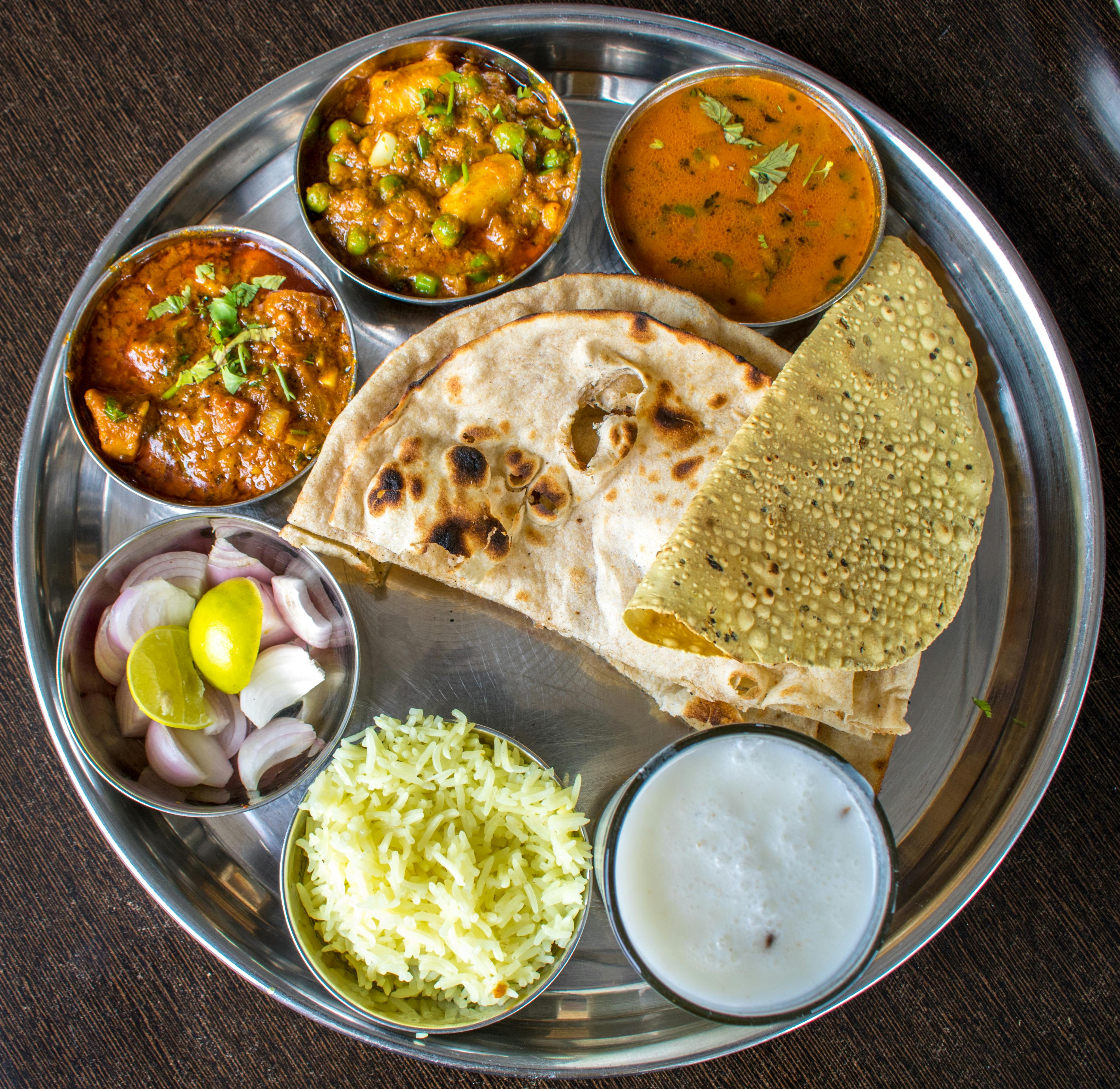
Many camps offer traditional Rajasthani thali dinners where 8 to 12 different dishes arrive simultaneously on a large brass plate — dal, sabzi, roti, rice, pickle, papad, chutney, and dessert — giving visitors a complete tasting of the regional cuisine in a single magnificent spread. Eating a traditional Rajasthani thali at a Jawai camp after a morning leopard safari with the smell of wood smoke in the air and a million stars overhead is one of the finest dining experiences India offers.
Chai Culture at Jawai — The Sacred Morning Cup
No food guide to Jawai would be complete without honouring the role of masala chai in the daily rhythm of life here. Rajasthani masala chai is stronger, spicier, and more generously sweetened than the tea served in most Indian cities — made with full-fat buffalo milk, boiled long with ginger, cardamom, black pepper, and cloves until it turns a deep caramel colour and the spice aromas are almost overwhelming.
At Jawai chai is served before every morning safari — a pre-dawn ritual in the cool darkness before the jeep departs, hands wrapped around a small clay kulhad cup, the spiced steam rising into cold morning air. This single cup of chai before a Jawai leopard safari is somehow one of the most perfect small moments any travel experience can produce.
Where to Eat Near Jawai
Safari Camp Restaurants
The best food at Jawai is served at the safari camps themselves — particularly the better luxury and mid-range properties that employ local Rajasthani cooks using traditional recipes and locally sourced ingredients. Always request traditional Rajasthani dishes rather than the generic Indian menu some camps offer for visitors who are unfamiliar with regional cuisine.
Bera Village Dhabas
Several simple roadside dhabas in Bera village serve honest, inexpensive Rajasthani meals — dal, sabzi, roti, and occasionally laal maas for non-vegetarian visitors. These small local restaurants are completely unpretentious, extremely affordable, and often produce food of remarkable quality — the kind of cooking that has been refined through daily repetition over many years rather than formal culinary training.
Sadri Town Market
The nearest market town to Jawai — Sadri, approximately 5 km away — has a small cluster of local sweet shops and snack stalls selling Rajasthani mithai (sweets) including ghevar, mawa kachori, and makhan bada that are worth seeking out for an authentic local sweet experience.
Food Tips for Jawai Visitors
- Request traditional menu in advance — tell your camp when booking that you want authentic Rajasthani food rather than continental options
- Try everything — dishes like ker sangri that sound unfamiliar are often the most memorable food discoveries of the entire trip
- Ask about Rabari food experiences — some camps arrange village cooking demonstrations or community meals that are deeply authentic and memorable
- Eat laal maas carefully if you are sensitive to heat — authentic Mathania chilli laal maas is genuinely very spicy and can surprise visitors expecting a milder restaurant version
- Drink only bottled or camp-filtered water — tap water in rural Rajasthan is not safe for visitors without local immunity
Final Thoughts — Feed Every Sense at Jawai
A Jawai safari asks you to open every sense — to watch more carefully, listen more deeply, move more slowly, and pay attention to a living world that most modern life trains us to ignore. Rajasthani food at Jawai asks the same of your palate — to taste something ancient, genuine, and deeply connected to the land you are sitting in.
The leopards of Jawai will feed your eyes and your soul. Let the food of Rajasthan feed everything else.
Book Your Official Jawai Safari & Stay Package
Don't miss out on peak sighting hours! Reserve your authorized 4x4 gypsy safari and hotel stay with us today.
You Might Also Like